

What Is A Distal Pancreatectomy?
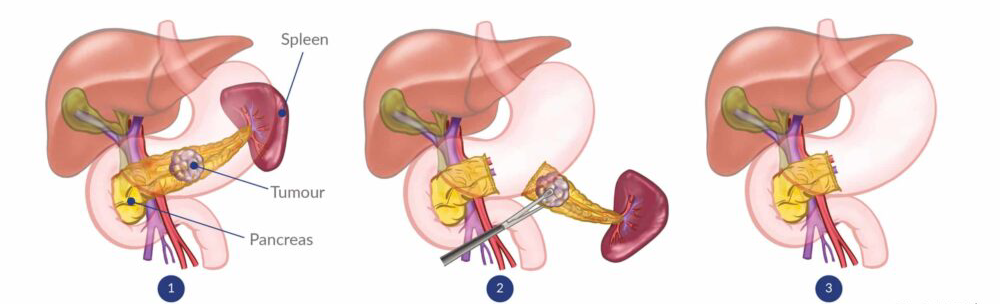
A distal pancreatectomy is an operation to remove the left side (body and tail) of the pancreas. This part of the pancreas lies close to the spleen, and in some cases, the spleen may also need to be removed during the operation.
This surgery is commonly performed for pancreatic tumours (benign or cancerous), pancreatic cysts or pre-cancerous lesions, neuroendocrine tumours, or chronic pancreatitis affecting the pancreas.
How is the Surgery Performed?
- You are given a general anaesthetic so you are fully asleep and pain-free during the operation.
- The abdomen is accessed using either keyhole cuts or a single open incision, depending on what is safest for you.
- The pancreas is carefully located deep in the upper abdomen behind the stomach.
- Nearby organs are gently moved aside to clearly expose the tail of the pancreas.
- Important blood vessels around the pancreas are identified and protected.
- The spleen is preserved where possible, but may need to be removed if it is unsafe to separate from the pancreas, or if the type of disease requires the spleen to be removed.
- The diseased part of the pancreas (the tail and sometimes part of the body) is carefully divided and removed.
- The cut edge of the remaining pancreas is securely sealed to reduce leakage of digestive juices.
- A temporary drain may be placed near the pancreas to monitor healing after surgery.
- The incisions are closed and you are taken to recovery to wake up under close monitoring.
Hospital Stay and Early Recovery
Most patients stay in hospital for approximately 5–7 days. Pain is expected initially and is managed with medication. Fluids are started first, followed by a gradual return to normal food. Early mobilisation is encouraged to reduce complications. You may be discharged with an abdominal drain; if this is required a nurse will visit you daily at home to help you manage this.
Recovery at Home
Full recovery usually takes 4–8 weeks. It is normal to experience tiredness, mild abdominal discomfort, and changes in appetite. Patients are advised to avoid heavy lifting for 4–6 weeks and to follow wound care instructions provided by Dr Suthananthan.
Possible Risks and Complications
Possible risks following this type of surgery include pancreatic fluid leak (fistula), infection, bleeding, delayed stomach emptying, blood clots, or rarely, new-onset diabetes.
If the spleen is removed, additional vaccinations and infection precautions may be required.
When to Seek Medical Attention
Seek urgent medical attention if you develop fever, increasing abdominal pain, redness or discharge from the wound, persistent vomiting, shortness of breath, jaundice, or symptoms of high blood sugar such as excessive thirst or frequent urination. Please contact Dr Suthananthan’s rooms if you have any concerns but after hours you should present to an emergency department.
Follow-Up and Long-Term Outlook
Most patients recover well and return to normal activities. Ongoing follow-up and surveillance depends on the underlying condition and final pathology results; Dr Suthananthan will see you soon after your surgery to discuss this and will guide you regarding further treatment, imaging, and lifestyle advice. If your diagnosis confirms cancer, chemotherapy is likely to be recommended, and you will be referred to a medical oncologist.